
Continuing Education & Professional Development

We offer expert-led training opportunities designed to equip mental health professionals with practical skills and in-depth knowledge in evidence-based treatments for children, adolescents, and families.

The Boston Child Study Center (BCSC) is an evidence-based treatment, training, and research center dedicated to improving the lives of children, adolescents, young adults, and families through innovative empirically-supported treatments and assessments. BCSC is approved by the American Psychological Association (APA) to sponsor continuing education for psychologists. We maintain responsibility for this program and its content.

We are fully committed to conducting all activities in strict conformance with the APA’s Ethical Principles of Psychologists. We comply with all legal and ethical responsibilities to be non-discriminatory in promotional activities, program content, and in the treatment of program participants. View our Continuing Education Grievance Procedures for more information.

American Psychological Association
Boston Child Study Center is approved by the American Psychological Association to sponsor continuing education for psychologists. Boston Child Study Center maintains responsibility for this program and its content.

Upcoming Courses & Trainings:

Continuing Education

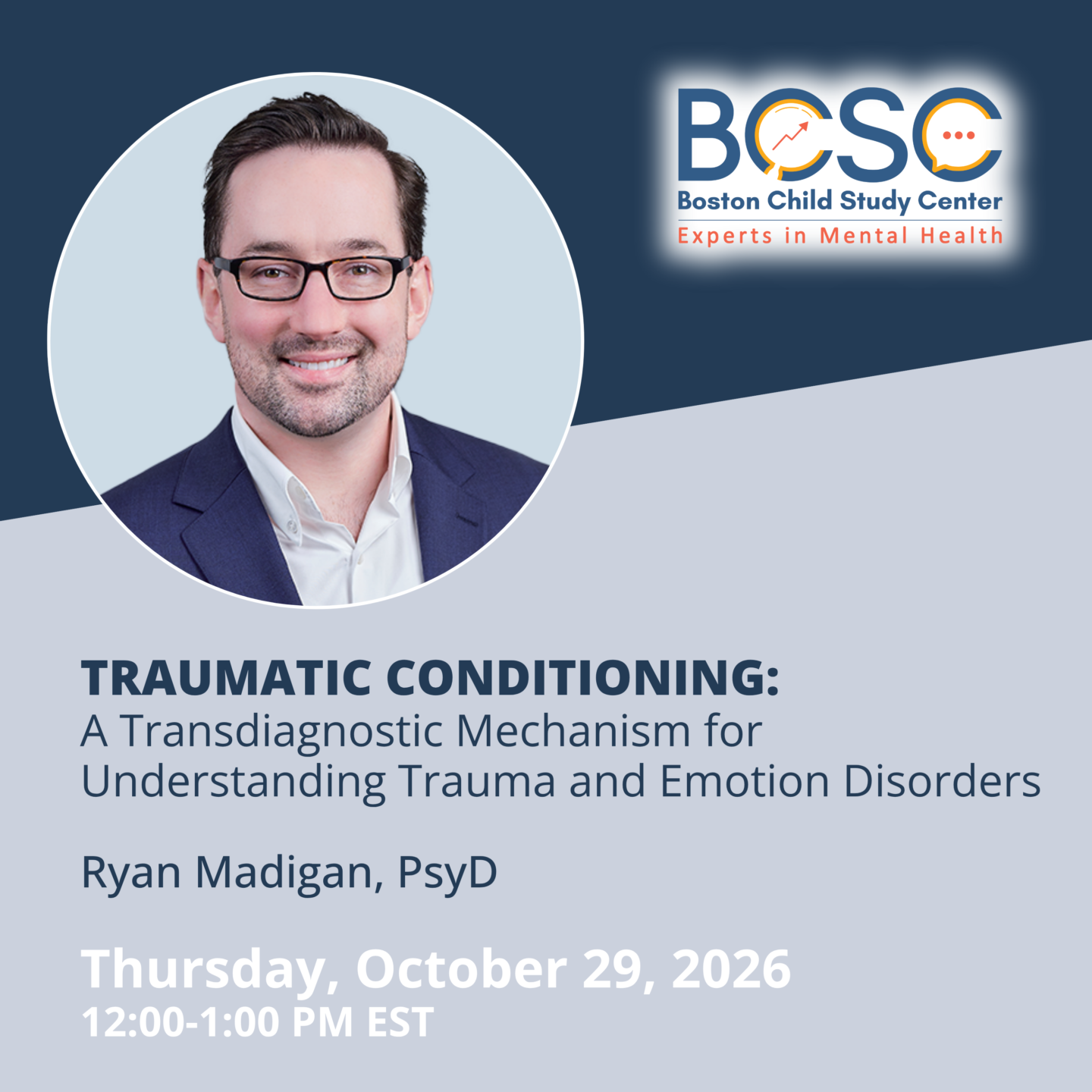
Traumatic Conditioning: A Transdiagnostic Mechanism for Understanding Trauma and Emotion Disorders

October 29, 2026 · 12:00-1:00pm EST
Virtual · Live via Zoom
This introductory seminar introduces clinicians to Dialectical Emotion Therapy (DET), a transdiagnostic approach to trauma and emotion disorders. Participants will explore emotions as meaningful signals, distinguish primary from secondary emotional and behavioral responses, and learn how traumatic conditioning may contribute to the development and maintenance of emotion disorders.
Continuing Education

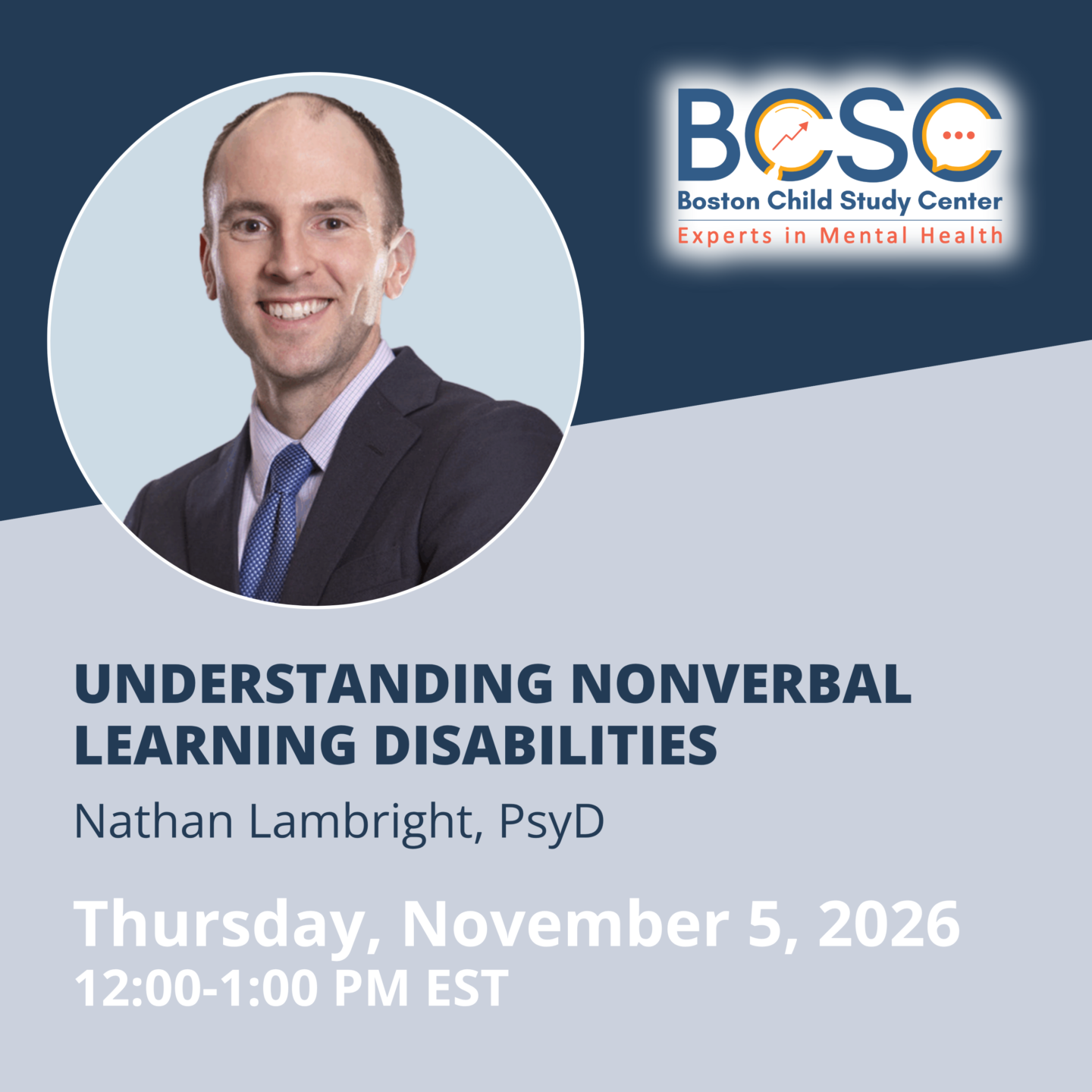
Understanding Nonverbal Learning Disabilities

Thursday, November 5, 2026 · 12:00-1:00pm EST
Virtual · Live via Zoom
This introductory seminar explores the core features of nonverbal learning disability (NVLD), including challenges in visual-spatial reasoning, executive functioning, social skills, and motor coordination. Participants will examine diagnostic considerations, neuropsychological assessment, and clinical strategies for supporting individuals with NVLD.
Continuing Education

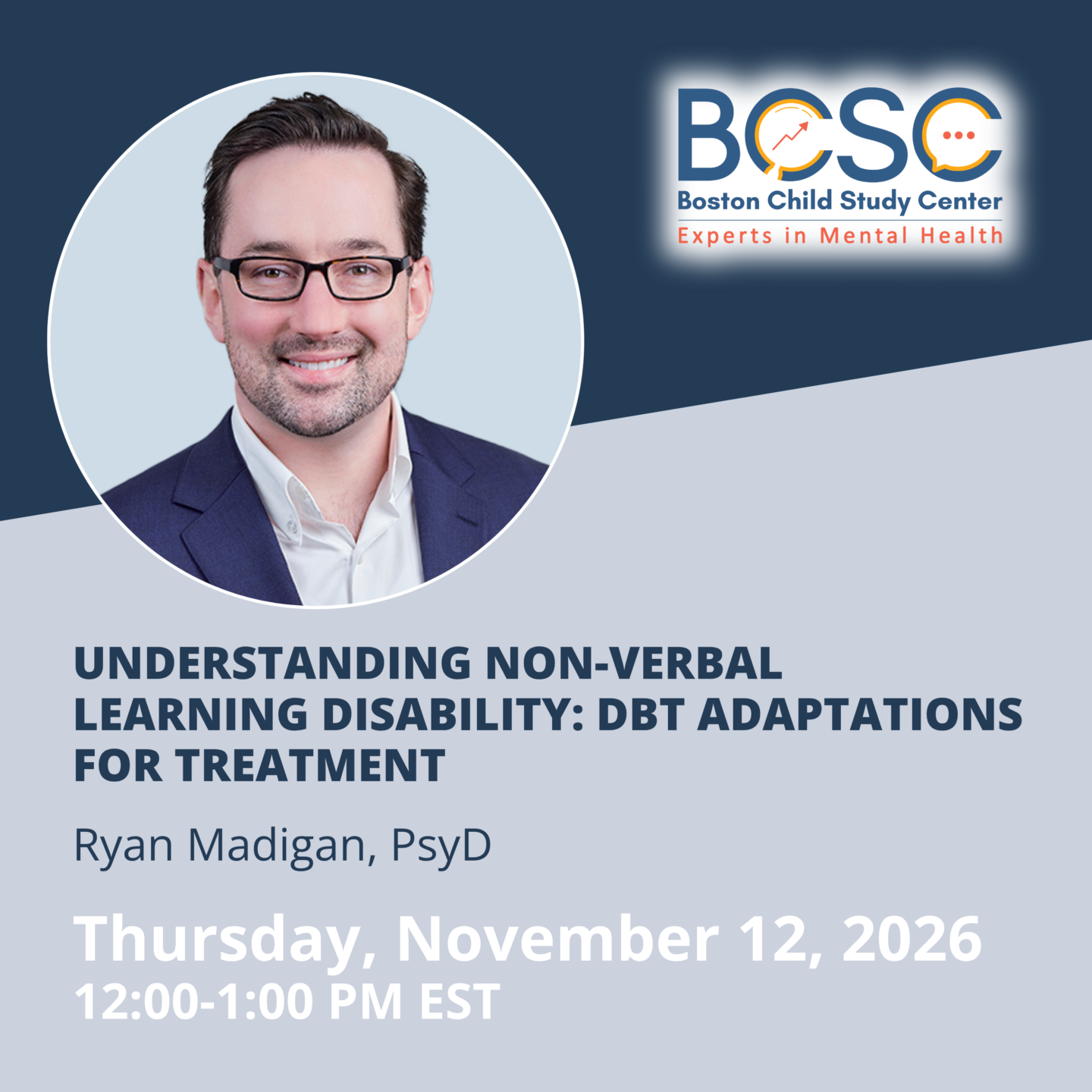
Understanding Non-Verbal Learning Disability: DBT Adaptations For Treatment

Thursday, November 12, 2026 · 12:00-1:00pm EST
Virtual · Live via Zoom
This introductory seminar explores the clinical implications of nonverbal learning disability (NVLD) and how dialectical behavior therapy (DBT) can be adapted to accommodate different cognitive and learning profiles. Participants will learn strategies for tailoring DBT interventions to support emotion regulation, social communication, perspective-taking, and interpersonal effectiveness.
Continuing Education

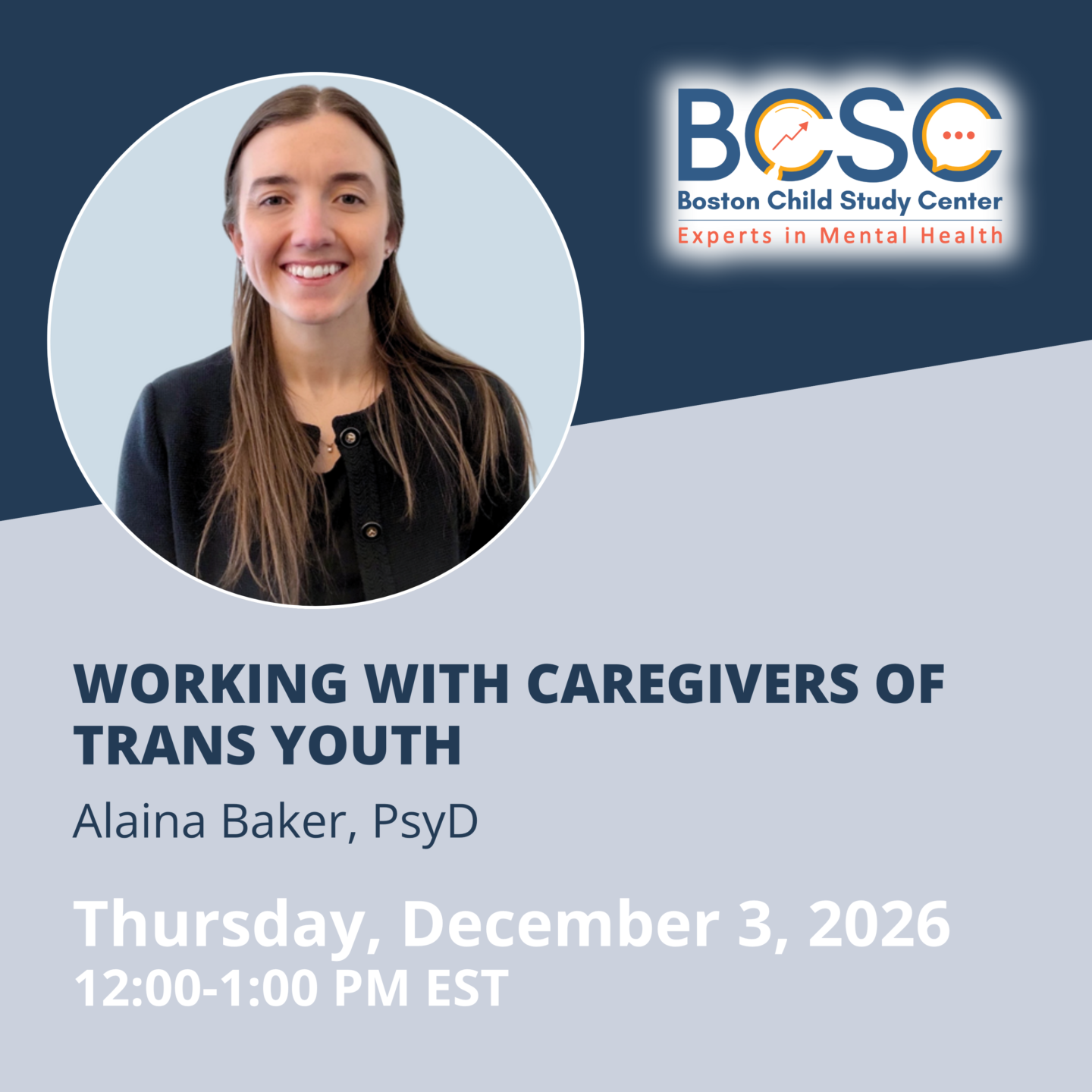
Working with Caregivers of Trans Youth

Thursday, December 3, 2026 · 12:00-1:00pm EST
Virtual · Live via Zoom
This introductory seminar explores clinical approaches to supporting transgender and gender-diverse youth and their caregivers amid evolving social and political challenges. Participants will learn strategies for navigating caregiver responses, fostering affirming family relationships, and addressing barriers to care while supporting the mental health and well-being of LGBTQ+ youth.
Continuing Education

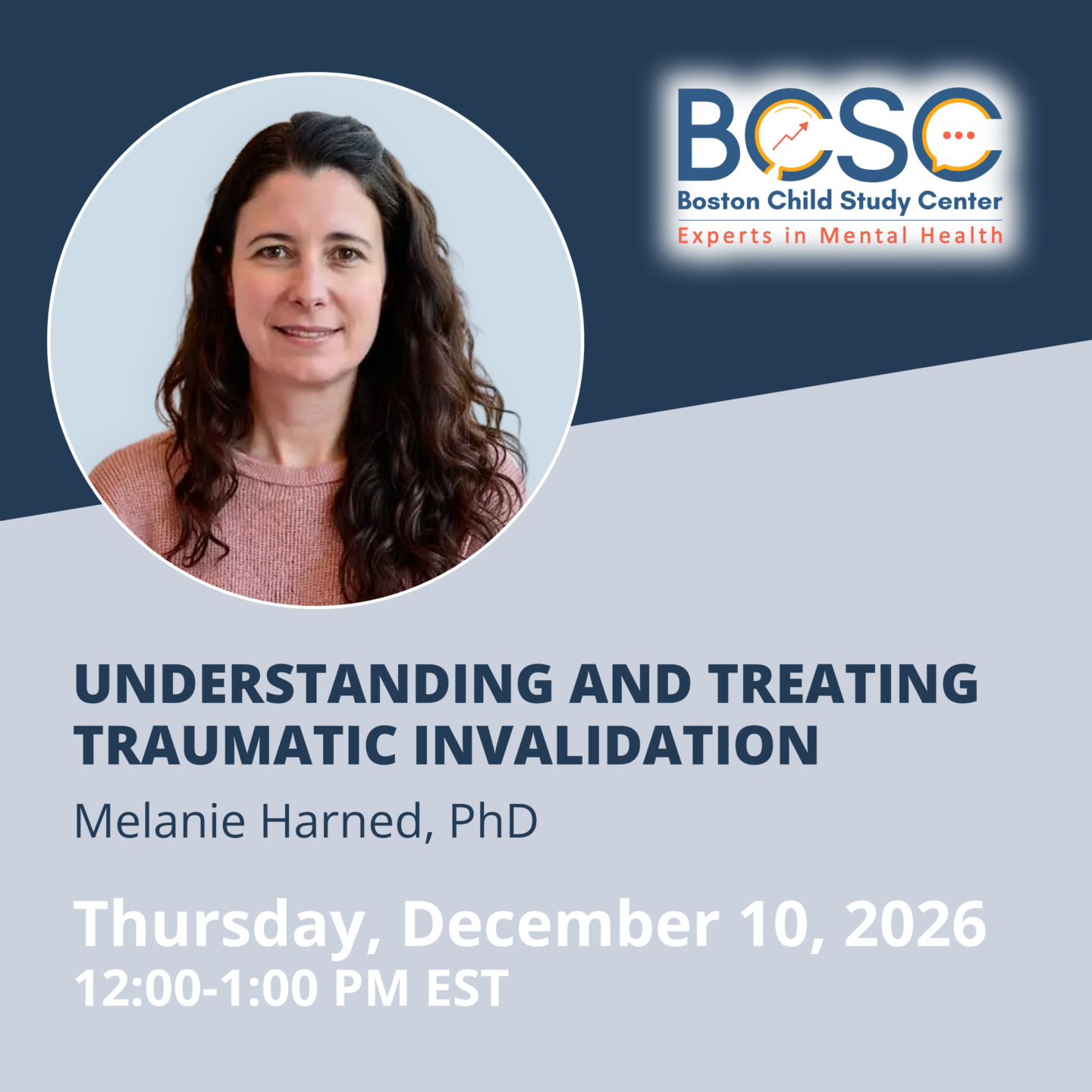
Understanding and Treating Traumatic Invalidation

Thursday, December 10, 2026 · 12:00-1:00pm EST
Virtual · Live via Zoom
This introductory webinar explores traumatic invalidation, its impact on mental health, and how repeated experiences of invalidation can contribute to PTSD, suicidality, and emotion dysregulation. Participants will examine clinical strategies for addressing trauma related to invalidation using DBT Prolonged Exposure (DBT PE), including navigating ongoing invalidating environments.

Past Courses & Trainings:

October 8, 2026

Responding to Suicidality in Therapy

Lyndsey Moran, PhD
This introductory seminar provides clinicians with practical guidance for assessing and managing suicide risk in clinical practice. Participants will review evidence-based approaches to risk assessment, crisis and safety planning, responding to acute suicide risk, and clinical decision-making, with attention to effective documentation and continuity of care.
October 1, 2026

Suicide Risk Factors: Data and Research Updates

Katie Roeder, PhD
This introductory seminar provides an overview of current research on suicide risk, including recent epidemiological trends, long-term risk factors, acute indicators, and protective factors. Participants will explore the complex and intersecting factors associated with suicide risk and consider the limitations of predicting suicide outcomes.
September 18, 2026

Teaching DBT Skills 2026

Lyndsey Moran, PhD
This practical one-day workshop helps clinicians strengthen their ability to teach DBT skills effectively, flexibly, and strategically. Designed for clinicians with foundational DBT knowledge, the training emphasizes practical application, troubleshooting, and a deeper understanding of how and when to use skills across all DBT modules, including Walking the Middle Path.
September 14, 2026

Dialectical Behavior Therapy 4-Day Training 2026

Lyndsey Moran, PhD
This immersive four-day training introduces the foundational principles and techniques of Dialectical Behavior Therapy (DBT), with an emphasis on applying DBT with adolescents and families. Designed for both clinicians new to DBT and those looking to deepen their existing practice, the training will provide practical guidance for delivering DBT with fidelity across core areas of treatment.
May 22, 2026

DBT With Families

Luciana Payne, PhD
This intermediate training focuses on applying DBT principles and strategies in family therapy—helping clinicians assess family targets, conduct family sessions, and address transactional patterns of emotion dysregulation and invalidation while maintaining adherence to DBT principles. Participants will learn how to use their existing DBT knowledge to engage entire families, with special attention given to addressing clinicians’ hesitation and fears about family work and to developing confidence in using DBT with complex family systems.
December 9, 2025

Trauma-Focused Cognitive Behavior Therapy for Children and Adolescents: A Comprehensive Review of the Leading Evidence-based Treatment for Childhood Trauma

Michael Gomez, PhD
This introductory three-day training provides clinicians with a practical foundation in Trauma-Focused Cognitive Behavioral Therapy (TF-CBT), including the PRACTICE framework and evidence-based strategies for treating childhood trauma. Through interactive instruction, case examples, and role-plays, participants will develop skills and confidence in delivering TF-CBT to children, adolescents, and caregivers.

Questions? For more information, call (617) 800-9610.

Note for APA Continuing Education: Boston Child Study Center is approved by the American Psychological Association to sponsor continuing education for psychologists. Boston Child Study Center maintains responsibility for this program and its content. There is no known commercial support for this program.

Additional Training Opportunities:

BCSC offers PCIT training for clinicians who are interested in applying the PCIT model at their agency. The training is for therapists who have a minimum of a Master’s degree in mental health (e.g., social work, counseling) and are licensed within their respective field. If not licensed, the therapist must be supervised by a licensed clinician. Doctoral students need to have completed three years of training and must be supervised by a licensed clinician.

PCIT training is conducted by PCIT-International Global Trainers and involves a 5-day workshop (across two sessions), videotape review of targeted sessions, and ongoing consultation to assist with clinical, organizational, and technology-related issues to help with treatment fidelity and sustainability. This training period is up to 14 months.

For more information, please send an email to jmasse@bostonchildstudycenter.com

Child-Adult Relationship Enhancement (CARE) is a trauma-informed, field-initiated modification of specific positive parenting practices. Many of practices are also used in evidence-based, therapeutic parenting programs such as Parent-Child Interaction Therapy (PCIT). While CARE uses many of the same ideas and skills, CARE is not a therapy program, a treatment, or a structured intervention. CARE is a way for any adult to cultivate a relationship with any child and modify behavioral difficulties.

CARE training workshops can be at your preferred location or at our office and can take one of two forms listed below. The training level is varied based on the setting, client population, and agency goals.

  • 3-4 hours: Lecture, demonstrations, and practice.
  • 6 hours: Lecture, demonstrations, practice, and live coaching. This can be split into (2) 3-hour sessions.


For more information, please send an email to jmasse@bostonchildstudycenter.com

Check Out Our Blog

Understanding Different Approaches to Trauma Treatment

The term trauma therapy is used frequently, but it can mean many different things. There are several evidence-based treatments for trauma-related symptoms, and they do not all look the same. Some focus on approaching memories or situations that have been avoided. Others focus more heavily on beliefs that developed after

Read More »

Have questions or want more information about any of our services?

We're here to help.