Dialectical Behavior Therapy (DBT) is one of the most well-researched treatments for individuals experiencing chronic emotion dysregulation, self-harm, and suicidal behaviors. However, not all DBT programs are the same, and outcomes depend heavily on how closely a program adheres to the evidence-based model.
DBT is not simply a set of skills – it was developed and tested as a structured, multi-component treatment. Research consistently shows that comprehensive, adherent DBT programs produce significantly better outcomes than isolated interventions or “DBT-informed” approaches.
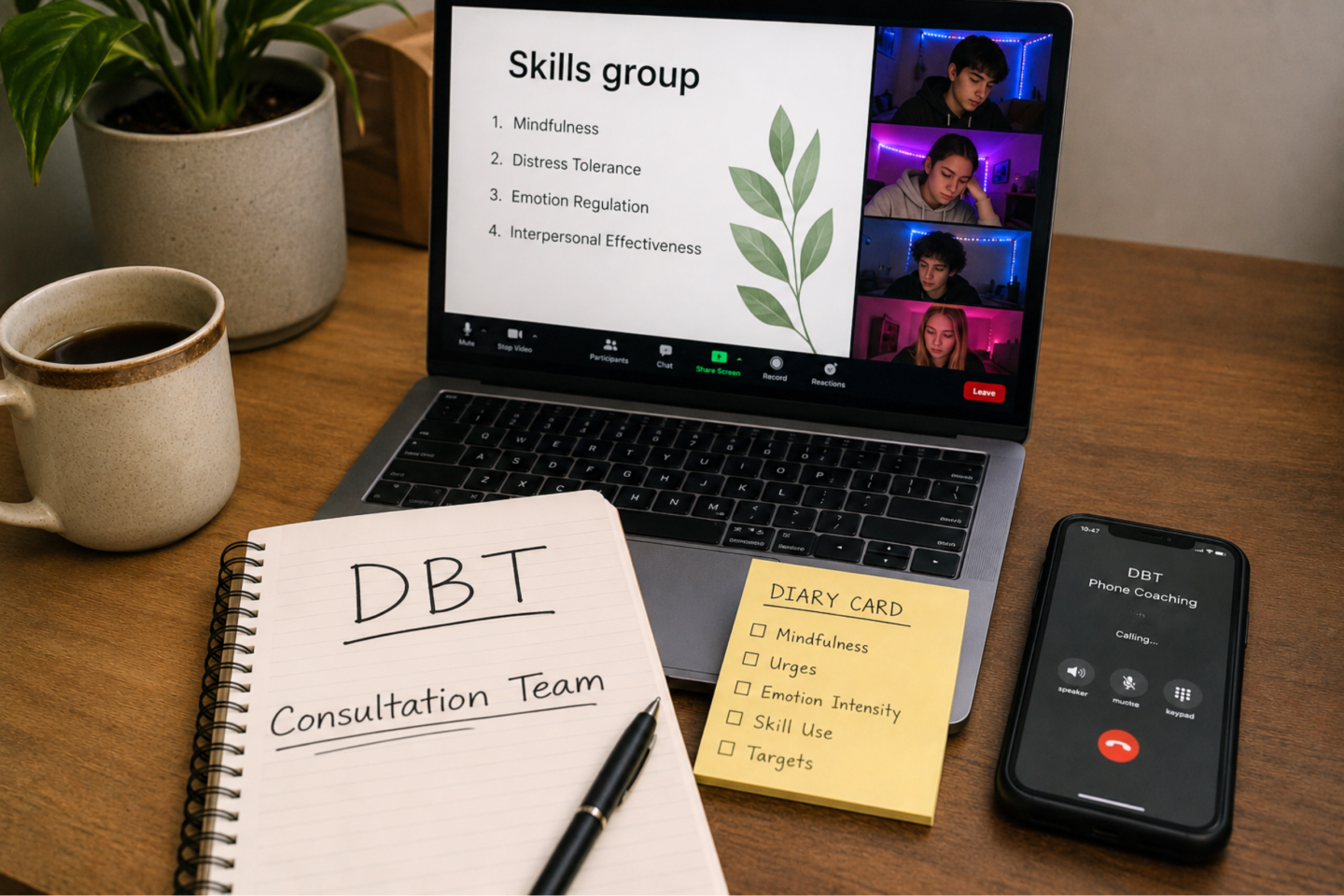
Standard DBT includes four core components that are designed to work together as a system:
- Individual therapy
- Skills training (often in group format)
- Between-session coaching
- Therapist consultation team
The DBT Consultation Team
One of the most important (and least visible) components of DBT is the consultation team. A DBT consultation team is a structured weekly meeting where clinicians meet to support one another in delivering adherent treatment. Marsha Linehan, the creator of DBT, describes the consultation team as essential for maintaining treatment fidelity. Qualitative research with DBT clinicians further suggests that consultation teams improve both technical adherence to the model and emotional support for clinicians, which in turn supports treatment consistency.
The DBT consultation team is designed to:
- Maintain therapist adherence to DBT principles
- Support therapist effectiveness
- Prevent burnout and therapist drift
- Improve clinical decision-making
Why does this matter for clients?
While consultation teams focus on clinician support, the downstream impact is meaningful for clients. DBT outcomes are strongest when therapists are supported, consistent, and adherent to the model.
Markers of a High-Quality DBT Program
Programs that only offer DBT skills groups or loosely “DBT-informed” therapy are not equivalent to the treatment model studied in randomized controlled trials. A strong DBT program typically includes:
- Full adherence to the DBT model (not skills-only treatment)
- Clear behavioral targets and treatment hierarchy
- Measurement of progress over time
- Ongoing clinician consultation team participation
- Formal DBT training for providers
What to Ask When Choosing a DBT Program
It is important to clarify whether a program is delivering adherent DBT or a modified version of the treatment. Families and clients may find it helpful to ask:
- Do clinicians participate in a DBT consultation team?
- Is the full DBT model offered or only selected components?
- How is treatment fidelity maintained?
- How is progress measured over time?
Looking for DBT Therapy in Massachusetts or Maine?
At BCSC, we offer comprehensive DBT for children, adolescents, and young adults.
In Massachusetts, clients participating in comprehensive DBT are enrolled in our Signal DBT Program. Signal DBT includes the core components of comprehensive DBT, including:
- Individual therapy
- DBT skills training
- Phone coaching
- DBT consultation team support for clinicians
For adolescent clients, Signal DBT includes a multifamily skills group, an important component of DBT for Adolescents (DBT-A) as originally developed by Alec Miller and colleagues. Multifamily skills groups are designed to help teens and caregivers learn and practice DBT skills together, improve communication, and build a more supportive home environment.
In Maine, we also provide comprehensive DBT services grounded in the same evidence-based principles and treatment structure, tailored to the needs of each client and family.
Whether you are seeking support for yourself or a family member, finding a DBT program that prioritizes adherence, collaboration, and evidence-based care can make a meaningful difference in treatment.